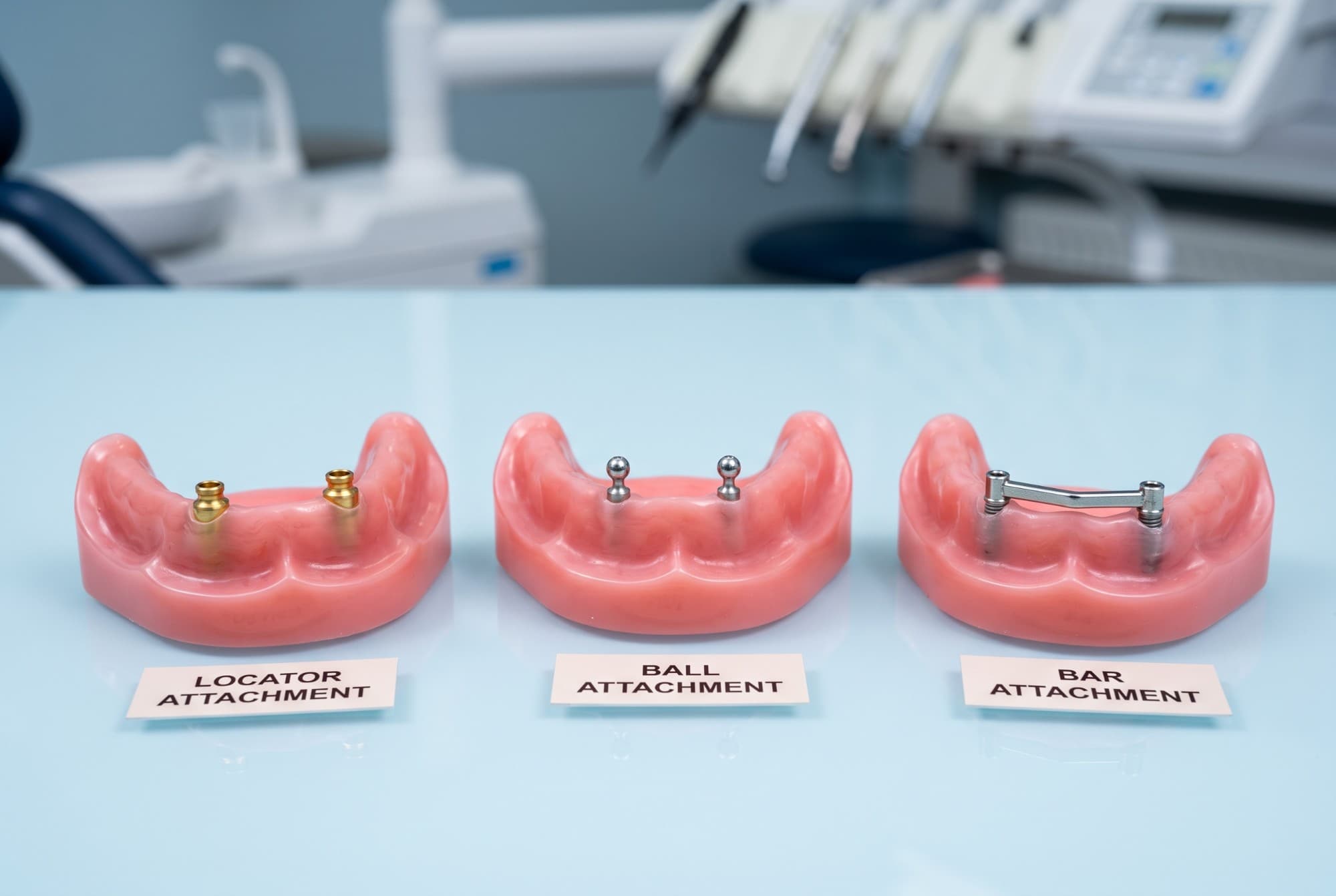

The word "graft" scares people. I watch it happen in the consultation chair — I say "bone graft" and I can see the patient quietly deciding this is going to be complicated, expensive, or a reason to give up on implants altogether.
So let me take the fear out of it early: needing a graft is common, not a disqualifier. It usually means "a bit more time," not "no."
Why bone becomes the question at all
When a tooth comes out — whether last month or twenty years ago — the jawbone that used to support its root starts to shrink. Bone is living tissue; it stays dense when it has a job to do, and it resorbs when that job disappears. The longer you've been missing teeth, or the longer you've worn a conventional denture resting on the ridge, the more that ridge has typically thinned.
That matters for implants because an implant needs a certain amount of solid bone around it to fuse properly and carry the bite forces of a snap-on overdenture for years. Not an enormous amount — but enough, at the right density, in the right spot.
What actually decides whether you need one
Not a guess, and not your age. It comes down to a handful of concrete things your surgeon measures directly:
- How long you've been missing teeth in that arch. Recent extractions usually leave more bone than a ridge that's been bare, or under a denture, for many years.
- Which arch and which site. The front of the lower jaw tends to keep its density longest, which is exactly where the standard implant positions sit — a lucky overlap, not a coincidence in how the standard 3-lower/4-upper plan was worked out.
- A CBCT (3D) scan. This is the only way to actually see height, width and density at each planned implant site, rather than estimate from a flat X-ray or a guess. It's the same scan that confirms your final implant count.
- Whether you've worn a denture that's been rocking or moving. Movement against the ridge can accelerate bone loss in specific spots, which is one more reason a loose lower denture is worth addressing sooner rather than later.
Two people with the same number of years missing teeth can have completely different amounts of bone left. There's no shortcut past the scan.
If you do need one, here's what actually happens
Bone grafting adds material — sometimes your own bone from elsewhere in the mouth, sometimes a processed graft material — to rebuild a thin spot before or during implant placement. Your oral surgeon decides which approach fits your case; that's squarely their call, not mine, and it's worth asking them to walk you through it directly rather than piecing it together from something you read online.
What I can tell you plainly: grafting is routine surgery, not rare or experimental. Surgeons do it constantly, as a normal part of implant planning rather than an emergency detour. The two things it genuinely adds are:
- Healing time. The graft needs to integrate before (or alongside) your implants, which stretches your overall timeline. Your surgeon will give you the specific window for your case.
- Some additional surgical cost. Implant surgery already runs $1,500–$3,000 per implant, billed separately by the oral surgeon rather than by us — a case needing grafting tends to land toward the higher end of that range rather than outside it. There's no separate published "graft fee" because it's the surgeon's domain, not ours; they'll quote it directly once they've seen your scan.
What it doesn't usually add is a reason to stop. See our full implant denture cost breakdown for how that surgical fee fits alongside our flat overdenture pricing.
Why "not yet" beats "not ever"
The patients who get discouraged are usually the ones who heard "you'll need a graft" and quietly filed that under "implants aren't for me." That's the wrong translation. The right one is: your bone needs a bit of help before it can hold the implant long-term — which is a solvable, well-understood step, not a verdict.
I'd rather you hear the real picture from a CBCT scan than rule yourself out from a general worry about what "graft" sounds like. Come in, and we'll look at your actual jaw, refer you for the scan if implants are on the table, and give you an honest read on whether grafting applies to you at all.
Thinking about your options? Book a free, no-pressure consultation with Damien John Hiorth DD at Dentures Direct in North York. Honest assessment, clear pricing, and we'll tell you if you're not a candidate too.
Frequently asked questions
Does needing a bone graft mean I can’t get implant dentures?
No. Needing a graft is common and simply means a solid foundation is built before or during implant placement. It typically adds healing time, not a disqualification.
Why does bone loss happen after losing teeth?
Jawbone stays dense when it has tooth roots to support. Once a tooth is gone, the bone that supported it gradually resorbs. The longer the tooth has been missing, the more that area of bone has typically thinned.
How do I know if I need a bone graft for implant dentures?
Only a CBCT (3D) scan of your jaw can confirm this. It shows the height, width and density of bone at each planned implant site, which is what your oral surgeon uses to decide whether grafting is needed.
How much does a bone graft add to the cost of implant dentures?
There is no separate published graft fee, since bone grafting is part of the implant surgery billed directly by the oral surgeon, not by Dentures Direct. Implant surgery generally runs $1,500–$3,000 per implant, and a case needing grafting tends to land toward the higher end of that range rather than add a separate cost outside it.
Does a bone graft delay getting my implant denture?
Usually, yes, by some amount — the graft needs time to integrate with your existing bone before or alongside implant placement. Your oral surgeon gives the specific timeline for your case since it depends on how much grafting is needed.

Damien John Hiorth DD
Founder & Lead Denturist · 25 years · Dentures Direct, North York Toronto